



Jeremy had responded quickly to me on the first quote even though I am only doing some renovation to my kitchen and two bathroom. Jeremy is able to provide me with very good advise for the renovation.
We were very grateful to Brandon and his team to complete our renovation within a tight timeline despite many challenges encountered during the renovation. Brandon was a responsible and reliable designer who tried his best to meet our requests. He would immediately rectify issues whenever we visited the site.
HDB Resale Renovation – Maximizing Space & Functionality
Many homeowners struggle with outdated layouts and inefficient use of space in resale flats. Poor storage solutions and aging interiors make homes feel cluttered and unappealing.

✅ 3x better space utilization with custom-built storage solutions
✅ Energy-efficient lighting reduced electricity costs by 20%
✅ Modernized design increased home value by 15%
9 Creation’s expert designers optimize every corner, blending functionality with aesthetics to create a comfortable and stylish living space.

What Makes HDB Renovation Sustainable?
When most people hear “sustainable renovation,” they think of eco-friendly materials alone. But sustainability in an HDB flat runs deeper. It means harmonising environmental responsibility with functional living, while staying compliant with HDB rules and within budget.
A truly sustainable renovation limits waste, reduces energy usage, and selects resources that minimise carbon footprint. It is not about luxury upgrades or complicated systems—it is about small, thoughtful changes that add up to a healthier home and a lighter environmental impact.
Think of it this way: every decision you make in your flat has a ripple effect. The paint you choose influences indoor air quality. The flooring you install affects energy efficiency and long-term waste. Even the way you configure your storage impacts how much you consume in the future.
According to the Building and Construction Authority (BCA), adopting green renovation practices can cut energy consumption by up to 30%. That is not just good for the planet—it translates directly into lower utility bills for families already mindful of their monthly expenses.

Maximising Space with Eco-Friendly Ideas
Space is always a challenge in HDB flats. Sustainable design thrives not by ignoring these constraints but by transforming them into opportunities.
Eco-friendly design often aligns with space-saving, because both prioritise efficiency and simplicity.
Take multi-functional furniture as an example. A modular sofa that can convert into a guest bed reduces the need to buy extra furniture, saving both money and materials.
In one 3-room HDB in Bukit Batok, a young couple chose a fold-away dining table that doubled as a study desk. By doing so, they freed up precious floor area without sacrificing function. Less clutter also meant better airflow and less reliance on energy-intensive cooling.

Smart storage solutions are another hallmark of sustainable design. Instead of buying multiple wardrobes, built-in vertical cabinets make use of height and reduce material consumption. I once worked with a family in Bedok who installed overhead storage above doorways. The clever design meant fewer bulky furniture pieces and a home that felt more spacious.
Natural ventilation and daylight also play a critical role.
By positioning mirrors opposite windows and choosing reflective finishes, you can amplify daylight and reduce the need for artificial lighting. A family in Hougang used this technique with pastel wall colours, making their compact 4-room flat feel brighter and more open. As a result, they reported turning on their lights later in the evening than before.
These strategies prove that sustainability is not about doing more.
It is about doing smart. Every choice that reduces clutter, improves air flow, or extends daylight is a step toward greener living—and, often, a step toward a calmer, more inviting home.
Affordable Green Hacks for HDBs
One of the biggest fears homeowners have is that sustainability equals high cost. But the truth is, many affordable hacks exist that lower expenses while still being eco-friendly.
Durability is the first principle. Choosing finishes that last longer reduces both replacement costs and waste. A couple in Tampines shared how their choice of polished concrete flooring cost less over ten years compared to laminate, because it resisted wear and needed little upkeep.
Reuse and upcycle whenever possible. Salvaging old cabinetry, repainting with low-VOC paint, or refurbishing furniture not only saves money but adds character. One memorable project involved transforming an old study desk into a kitchen island. It gave the family more counter space while preserving sentimental value.
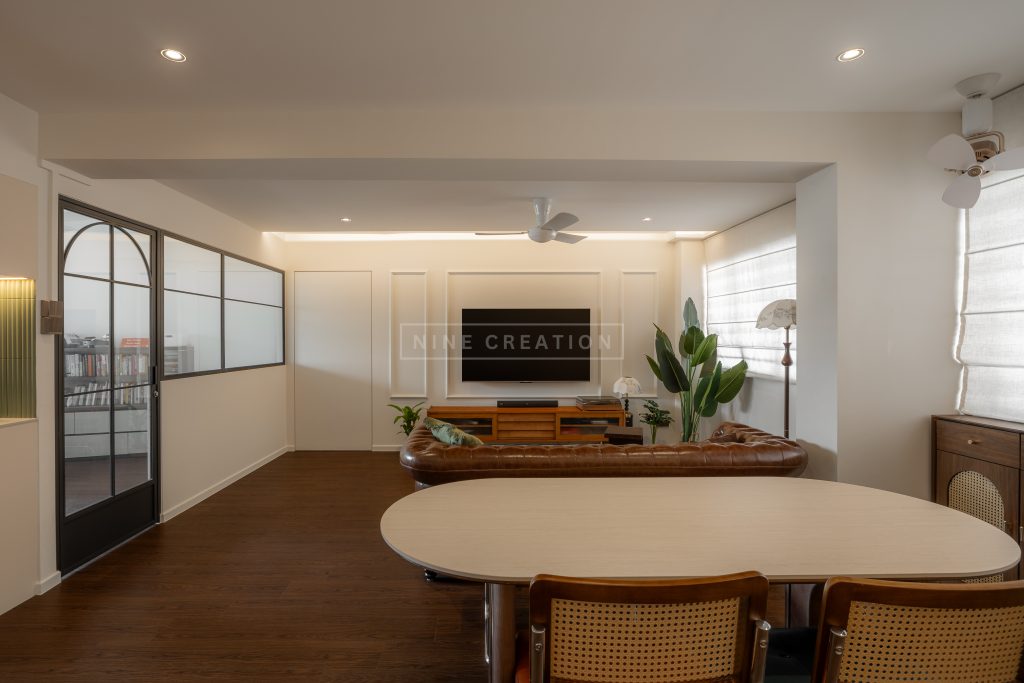
Lighting is another area where affordable green hacks shine.
LED bulbs, though slightly more expensive upfront, use up to 75% less energy and last years longer.
A homeowner in Queenstown switched entirely to LEDs and saw her monthly bills drop by 20%. Adding sensor lights in bathrooms ensured that no light was left on unnecessarily, further reducing costs.
Paint choices matter as well. Low-VOC paints are budget-friendly and readily available in Singapore. They protect indoor air quality, which is especially crucial in compact HDB flats where ventilation can be limited.
The beauty of these hacks is that they do not feel like compromises. Instead, they offer practical, stylish solutions that align with both wallet and planet. That is the heart of affordable green renovation: smart choices that carry benefits long after the dust settles.
Which Materials Fit HDB Budgets?
Material choice is one of the most powerful levers in sustainable renovation. Fortunately, Singapore offers a growing range of eco-friendly materials that balance cost, durability, and design.
Bamboo remains a popular option. As a rapidly renewable resource, it is biodegradable and surprisingly strong when treated. A family in Sengkang used bamboo shelving in their living room, enjoying both the natural look and the knowledge that their choice supported sustainability.
Recycled timber is another budget-friendly choice. Its reclaimed character adds warmth, and when used for cabinetry or frames, it reduces deforestation. I remember an HDB project in Ang Mo Kio where recycled timber was used for wardrobe doors, turning a basic necessity into a design feature that guests always noticed.
Low-VOC paints are perhaps the most accessible sustainable material. With prices similar to standard paints, they are an easy entry point for eco-conscious homeowners. Many families start their green journey here because it requires no lifestyle compromise.
Cork, while slightly more expensive, has unique advantages. It is a natural insulator, soft underfoot, and renewable. In one HDB in Toa Payoh, cork wallboards doubled as pin-up surfaces for children’s drawings, adding both function and personality.
Laminated composite panels made from recycled content also present a cost-effective solution. They are ideal for cabinet fronts and partitions, especially in compact kitchens. By using recycled content, you reduce waste while maintaining modern aesthetics.
Each of these materials proves that sustainable does not always mean costly. It is about knowing where to invest. A designer’s guidance helps identify which eco-friendly choices fit your lifestyle and budget best, ensuring that affordability and sustainability walk hand in hand.

Lighting and Energy Choices That Work Best
Lighting can quietly become one of the biggest energy drains in an HDB. Yet it is also one of the easiest areas to transform sustainably. LED bulbs, for example, consume up to 75% less energy than incandescent lights and can last 25 times longer. That means fewer replacements, less waste, and significant savings on your utility bills.

Smart lighting systems add another layer of efficiency. By installing dimmers, timers, or motion sensors, lights only work when you truly need them. In a 5-room flat in Woodlands, one family cut their lighting costs by almost 30% just by combining natural daylighting strategies with sensor-based LED lights in corridors and bathrooms.
Appliances also make a huge difference.
Choosing products with the Energy Label Singapore certification guarantees efficiency standards. Air conditioners, refrigerators, and washing machines with higher tick ratings may cost more upfront, but their reduced power consumption saves money every month. For families balancing tight budgets, this is where sustainable choices align beautifully with financial common sense.


Busting the Myths of Green HDB Renovation
Despite the growing popularity of sustainable renovations, myths still discourage many homeowners. Let’s set the record straight.
Myth 1: Eco-friendly always means expensive. This is perhaps the biggest misconception. While certain materials like cork or recycled glass tiles can be premium, many sustainable choices—like low-VOC paints, LEDs, or even polished concrete—are on par with or cheaper than conventional alternatives. The long-term savings in replacements and utility bills often outweigh the initial investment.
Myth 2: Green design looks boring or plain. In reality, eco materials come in a vast range of styles. Recycled timber can be rustic and warm, while bamboo offers a clean, modern look. Recycled glass tiles can be colourful and striking. Sustainable does not mean sacrificing aesthetics—it means expanding your design palette in innovative ways.
Myth 3: Eco materials don’t last. On the contrary, durability is a key feature of many green materials. Bamboo, when treated properly, is stronger than many hardwoods. Polished concrete is almost indestructible. Recycled timber often gains character with age. Longevity is part of sustainability, because the less you replace, the less you waste.
The Future of Sustainable HDB Living in Singapore
Singapore is moving toward greener living, and HDBs are central to this vision. The government’s Singapore Green Plan 2030 outlines ambitious goals to reduce carbon emissions, promote energy efficiency, and encourage sustainable lifestyles. For homeowners, this means more incentives, better access to eco-certified materials, and greater affordability in the years to come.
Future HDB flats may come pre-fitted with green features such as solar-ready rooftops, water-efficient fittings, and even centralised cooling systems. Renovations will likely shift further toward modular, prefabricated solutions that reduce waste and speed up timelines. For individual homeowners, this translates into more opportunities to embrace eco-conscious living without feeling it is a financial burden.
Already, developers and designers are integrating sustainable practices into mainstream projects. What was once considered niche or idealistic is becoming the new normal. For HDB owners, the future holds exciting possibilities: homes that are not only affordable and stylish but also aligned with Singapore’s broader sustainability goals.

Why the Right Partner Matters
One thing remains clear: even the best materials and ideas can fail if not implemented properly. This is why partnering with the right renovation firm is critical. At 9creation, we don’t just recommend eco materials—we help you understand how they fit into your lifestyle, budget, and HDB regulations.
For instance, choosing bamboo flooring is great, but pairing it with low-VOC finishes ensures indoor air remains healthy. Using recycled timber is stylish, but ensuring it is treated properly avoids long-term maintenance issues. These small but vital details are what separate a good renovation from a great one.





Internal Resources to Explore
If you’d like to dive deeper into eco-friendly living, you may find these resources on our site useful:
• 10 Eco-Friendly Renovation Tips Designers Use to Create Healthy Homes
• Complete Home Renovation Guide for Singapore Homeowners
• HDB Renovation Cost Guide: What Every Homeowner Should Know
Each of these guides builds on what we’ve discussed here, providing practical steps and insights tailored for Singapore homeowners.
Closing Thoughts
Sustainable interior design for HDB flats is not a luxury for the few. It is an achievable reality for every homeowner who wants a greener, healthier, and more stylish home without overspending.
From bamboo and recycled timber to low-VOC paints and LEDs, the choices today are vast and accessible. With the right guidance, these choices don’t just enhance your home—they reduce waste, lower bills, and contribute to a better future for Singapore.
If you’ve been wondering whether a sustainable makeover can work for your HDB, the answer is yes. And it can be done affordably, without stress or hidden costs. Many homeowners have walked into our showroom at 18 Boon Lay Way, Tradehub 21, #01-98A, S(609966) uncertain, and walked out confident in their renovation journey.
Connect with 9creation today and take the first step toward a smart, stylish, and sustainable HDB home. Because sustainability is not just about saving the planet—it’s about creating a home that feels good to live in, day after day.


