

Transitional interior design blends classic charm with contemporary minimalism, striking a timeless balance that is elegant yet practical. Characterised by clean lines, soft color palettes, and a mixture of traditional and modern furnishings, this style creates a cozy and functional space. For homeowners seeking both sophistication and simplicity, transitional interior design Singapore offers a seamless middle ground between ornate and modern aesthetics.
Why Is Transitional Interior Design Popular in Singapore?
In Singapore, where space is often limited, transitional interior design is increasingly popular across HDB flats, condominiums, and landed properties. Its adaptability to various floor plans and its ability to merge visual appeal with practicality make it an ideal choice. From living rooms to kitchens, this design style brings together classic and contemporary elements to create refined and enduring home interiors.
HDB Resale Renovation – Maximizing Space & Functionality
Many homeowners struggle with outdated layouts and inefficient use of space in resale flats. Poor storage solutions and aging interiors make homes feel cluttered and unappealing.

✅ 3x better space utilization with custom-built storage solutions
✅ Energy-efficient lighting reduced electricity costs by 20%
✅ Modernized design increased home value by 15%
9 Creation’s expert designers optimize every corner, blending functionality with aesthetics to create a comfortable and stylish living space.

The Transitional Interior Design Color Palette
1. Neutral Foundation
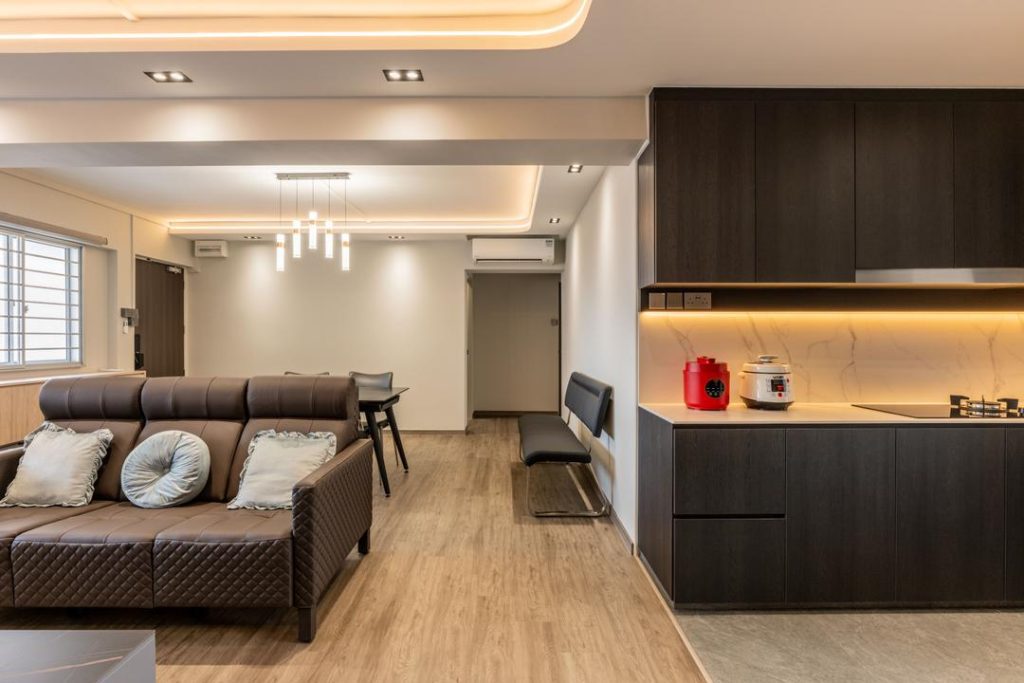
At the core of any successful transitional interior design Singapore approach is a neutral color base. Shades like white, beige, and soft grey serve as the perfect backdrop to unify traditional and modern décor, giving homeowners the flexibility to update accents without redoing the entire room.
2. Warm Accents
Add subtle vibrance through taupe, pale blue, or muted green tones. These warm accents enhance comfort and create an inviting environment while preserving the serenity that defines transitional interiors.
3. Steer Clear of Bold Colors
Unlike ultra-modern interiors that rely on bold contrasts, transitional design thrives on softness and balance. Earth tones and pastels help maintain a harmonious look that’s relaxing and timeless.
Core Elements of Transitional Interior Design Singapore
Furniture with Clean Lines and Gentle Curves
Transitional furniture blends modern simplicity with classic elegance. Think clean-lined wood tables paired with tufted sofas or neutral upholstered stools. The mix of structured and soft shapes results in a visually balanced home interior.
Mixed Materials: Wood, Metal, Glass, and Fabric
Texture plays a key role in transitional interior design Singapore. Wooden cabinets, glass lighting fixtures, metal hardware, and fabric cushions combine to create richness and visual interest.
Layered Lighting for Ambience and Functionality
From chandeliers in the living room to pendant lights in the kitchen, layered lighting helps set the mood while improving functionality. In bedrooms and bathrooms, soft lighting delivers a cozy, elegant feel.


Room-by-Room Guide to Transitional Interior Design in Singapore Homes
Living Room: Where Tradition Meets Contemporary Comfort
A transitional living room harmoniously blends the ornate with the modern. Classic architectural features like wainscoting or crown molding offer a timeless backdrop for sleek, contemporary sofas upholstered in neutral tones such as beige, soft grey, or taupe. Layer in textured area rugs—think wool or jute—for added warmth and dimension. Minimalist décor, such as black-framed art pieces, ceramic vases, and metallic accent tables, keeps the space uncluttered yet stylish. Add ambient lighting with a mix of floor lamps and a central chandelier or statement pendant, creating a cozy, inviting atmosphere perfect for both entertaining guests and unwinding after a long day.
Kitchen: The Heart of Transitional Functionality
In the transitional kitchen, form meets function in a timeless design. Shaker-style cabinets offer classic detailing, while quartz countertops and sleek backsplashes bring a clean, modern edge. Hardware in brushed nickel or matte black provides subtle sophistication without overwhelming the space. Stainless steel appliances blend seamlessly with both traditional and contemporary elements, ensuring a polished, cohesive look. Pendant lights above the island or breakfast counter deliver task lighting with a decorative touch, while under-cabinet lights enhance both function and ambiance. Thoughtfully placed open shelving or glass-fronted cabinets can showcase elegant dishware, reinforcing the kitchen’s refined charm.
Dining Room: Where Elegance Meets Everyday Use
A transitional dining room is equal parts luxurious and livable. The foundation is often a solid wood dining table—walnut, oak, or ash—with either a traditional turned-leg base or a sleek, contemporary silhouette. Upholstered dining chairs in neutral hues like ivory or dusty blue offer comfort and sophistication, especially when paired with nailhead trim or tufted detailing. Layering warm lighting—such as a chandelier with dimmable bulbs and wall sconces—helps establish a cozy dining ambiance. Accessorize the space with a combination of modern tableware, crystal glassware, and traditional centerpiece items such as ceramic vases or classic candle holders for a truly balanced aesthetic.
Bedroom: A Sanctuary of Calm and Style
A transitional-style bedroom focuses on serenity through balance. Start with a plush, upholstered headboard in velvet or linen to create a focal point, paired with sleek wood or lacquered nightstands featuring clean lines. Use a neutral color scheme—soft whites, muted greys, pale blues—to promote calm, complemented by rich textures like faux fur throws, crisp cotton bedding, and velvet cushions. Layered lighting is key: combine bedside lamps with a ceiling fixture and soft accent lights to create mood-enhancing warmth. A transitional bedroom feels upscale and tranquil, offering a high-end hotel-like retreat within your own home.

Bathroom: A Spa-Like Blend of Old and New
In a transitional bathroom, you’ll find a seamless fusion of modern utility and timeless elegance. Frameless mirrors, sleek under-sink cabinetry, and chrome or brushed brass hardware deliver a clean, uncluttered look. White or grey subway tiles lend a classic touch, while quartz or marble countertops add a layer of refinement. Incorporate soft lighting through wall-mounted sconces or backlit mirrors to mimic spa-like ambiance. Rainfall showerheads, freestanding bathtubs, and streamlined vanities make the space feel luxurious without being overly ornate. Subtle decorative elements—such as textured towels, greenery, and minimal art—elevate the space while keeping it functional and stylish.
Home Office: Productivity Meets Polished Design
A transitional home office is designed for both focus and comfort. Begin with a functional desk in wood or matte-lacquered finish—preferably with clean lines but classic legs or trim. A supportive, ergonomically designed chair upholstered in neutral fabric complements the space while adding a soft texture. Use neutral wall colors—like soft greige or ivory—as a calming backdrop, enhanced with tasteful décor such as framed artwork, bookshelves, or metallic desk lamps. Layer lighting with a mix of natural daylight, overhead fixtures, and a desk lamp for optimal illumination throughout the day. The result is a workspace that balances professional appeal with residential warmth.
Popular Transitional Interior Design Styles in Singapore
Modern Transitional
A minimalist approach with warm undertones—perfect for urban Singapore homes. Think sleek furniture, neutral shades, and soft textures for a clean yet cozy look.
Luxury Transitional
This upscale version uses premium materials like brass, marble, and velvet. Custom lighting and bespoke furniture elevate the space, creating a luxurious feel without being over-the-top.
Transitional Farmhouse
Rustic meets modern with exposed wood beams, simple fabrics, and traditional lighting. Ideal for homeowners who appreciate cozy and down-to-earth interiors.
French Transitional
Parisian opulence blends with modern minimalism through ornate moldings, gold accents, and refined textures. Great for those who love elegance with a subtle twist.
Memphis Transitional
This eclectic take features bold patterns balanced with neutral backdrops and classic furniture, offering an artistic flair within a structured layout.

Jeremy had responded quickly to me on the first quote even though I am only doing some renovation to my kitchen and two bathroom. Jeremy is able to provide me with very good advise for the renovation.
We were very grateful to Brandon and his team to complete our renovation within a tight timeline despite many challenges encountered during the renovation. Brandon was a responsible and reliable designer who tried his best to meet our requests. He would immediately rectify issues whenever we visited the site.
Transitional Interior Design Ideas for Small Singapore Homes
Space-Saving Furniture
Modular seating, extendable dining tables, and ottomans with storage help make the most of every inch. These smart solutions bring style without clutter.
Light and Airy Color Schemes
Use soft hues, sheer curtains, and reflective surfaces to create a sense of openness in smaller spaces. Pale walls and natural light make rooms feel larger and more inviting.
Multi-Functional Layouts
Flexibility is key in transitional interior design Singapore apartments. Living rooms that double as workspaces or kitchens with hidden storage ensure every square foot is used efficiently.

Conclusion
Transitional interior design is a versatile and timeless choice for Singapore homes. Whether you’re furnishing a new HDB flat or revamping your condo, this design style ensures elegance, comfort, and functionality across all rooms. With the perfect balance between classic and modern aesthetics, transitional interior design Singapore helps turn your house into a stylish sanctuary.
Let 9Creation Help You Create Your Dream Home
At 9Creation, we specialize in crafting personalized interiors for HDBs, condominiums, and landed properties. From 4-room renovations to compact home makeovers, our expert designers will guide you through every step of your transitional interior design journey. Let’s design a space that reflects your personality and enhances your lifestyle.


